
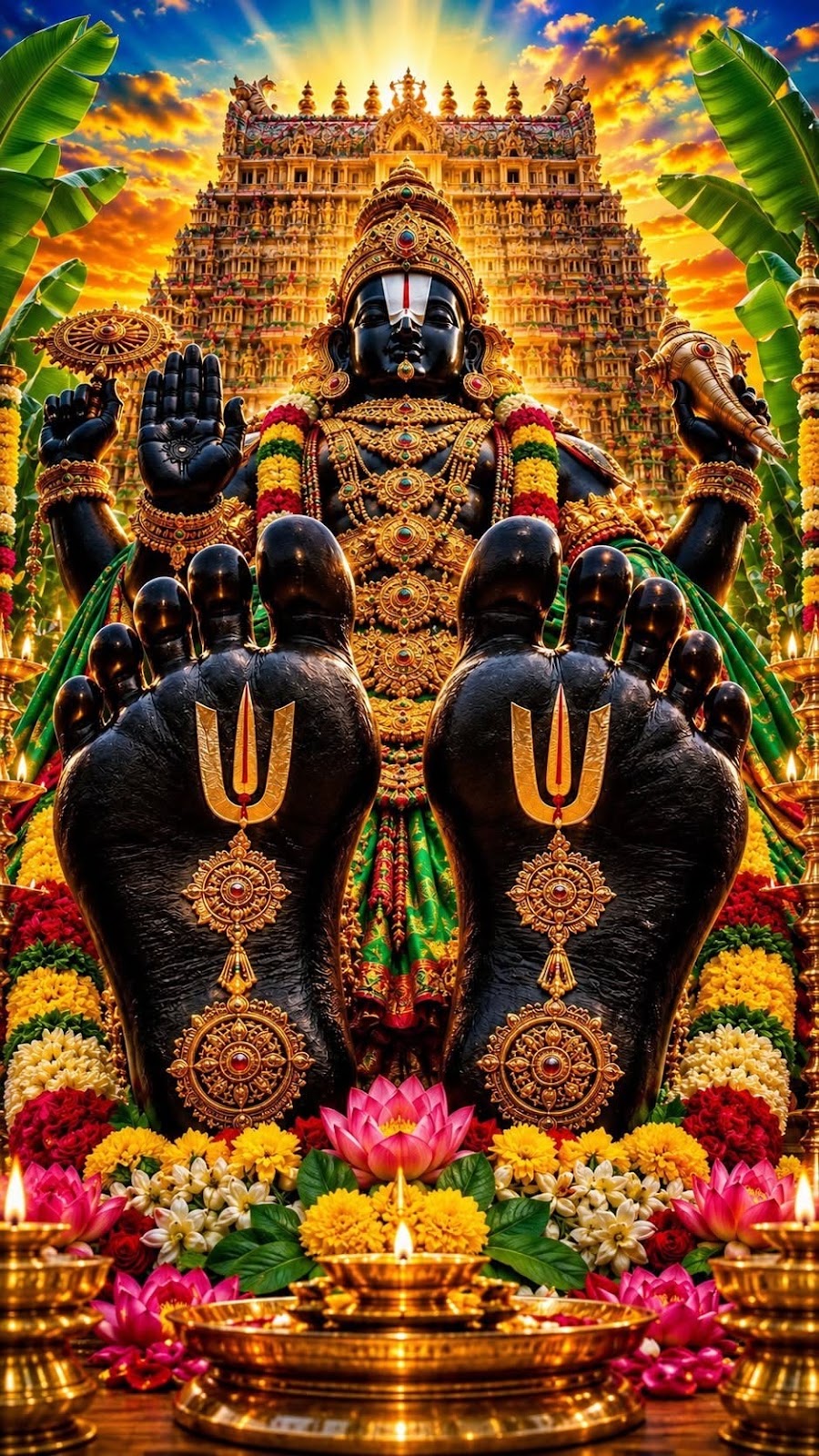
Om Namo Venkatesaya meaning is explored here, revealing its spiritual depth, proper pronunciation, and the heartfelt benefits of chanting this sacred mantra daily.
Om Namo Venkatesaya Meaning and Essence
The mantra begins with “Om,” the primordial vibration that pervades the universe, symbolising the ultimate reality. “Namo” is a humble salutation, expressing surrender and reverence. “Venkatesaya” is the Sanskrit name of Lord Venkateswara, the presiding deity of Tirumala, who is regarded as the embodiment of compassion and protection. Together, the phrase translates to “I bow to Lord Venkateswara, the remover of obstacles and bestower of grace.”
Traditional commentaries explain that chanting this mantra aligns the devotee’s heart with the divine energy of the hill shrine, creating a subtle bridge between the individual soul and the Supreme. Devotees believe that the sound carries the Lord’s blessings, purifying thoughts and inviting a sense of inner surrender. The mantra is often recited at the start and end of any worship, reinforcing the devotee’s connection to the Lord throughout the day.
In the Tirumala tradition, priests chant “Om Namo Venkatesaya” during the early morning Suprabhatam and before the main “Archana” rituals, underscoring its role as a foundational invocation. The mantra’s simplicity makes it accessible to children and elders alike, allowing families to share a common spiritual language. Its rhythmic cadence also aids meditation, helping the mind settle into a steady, devotional focus.
How to Chant Om Namo Venkatesaya Properly
Begin by sitting in a comfortable, clean posture, preferably on a mat or a small wooden “Aasan” used for puja. Take a few deep breaths to calm the mind, then gently close the eyes and visualize the golden sanctum of Tirumala. Pronounce each syllable clearly: “Om” (long ‘o’), “Na‑mo” (soft ‘a’), “Ven‑ka‑te‑sa‑ya” (each ‘a’ elongated). Maintaining a steady rhythm is essential; many devotees use a 108‑bead japa mala to keep count.
Traditionally, the mantra is repeated 108 times in one sitting, which corresponds to the number of beads on a mala and is considered a complete cycle of devotion. Some devotees prefer a smaller set of 16 or 32 repetitions for quick blessings, especially before beginning work or travel. It is recommended to chant at dawn or dusk, times regarded as “Sandhya” when spiritual energies are heightened, but the mantra can be offered any time with sincere intent.
While chanting, keep your heart focused on Lord Venkateswara’s benevolent form; you may hold a small brass “Aarti” plate or a picture of the deity as a visual anchor. The sound of a “Shankh” (conch) before the chant can amplify the vibration, a practice followed in many Tirumala households. End the session with a gentle “Namaste” and a moment of gratitude, acknowledging the Lord’s presence in your life.
Spiritual Benefits of Reciting Om Namo Venkatesaya
Devotees report a deepening sense of peace and mental clarity after regular recitation, attributing it to the mantra’s ability to quiet the restless mind. The vibration of “Om” resonates with the chakras, especially the throat and heart centers, fostering honest expression and compassionate feelings. By surrendering through “Namo,” practitioners cultivate humility, which eases interpersonal conflicts and reduces ego‑driven stress.
Many believers experience tangible relief from life’s obstacles after chanting, interpreting it as the Lord’s direct intervention. The mantra is also thought to protect the home from negative influences, a belief that leads families to chant it during house‑warming ceremonies. Consistent practice is said to attract prosperity and health, not as a material guarantee, but as a natural outcome of living in alignment with divine will.
From a scriptural perspective, the mantra encapsulates the essence of the “Namam” (sacred name) tradition, where repeating the divine name is considered a powerful form of yoga. Scholars note that the rhythmic repetition creates a meditative state similar to “Pranayama,” balancing breath and consciousness. Thus, chanting “Om Namo Venkatesaya” serves both as a devotional act and a subtle spiritual discipline.
Incorporating the Mantra into Daily Devotion
A simple way to embed the mantra in daily life is to set a reminder for the morning and evening “Aarti” times, using a phone alarm or a kitchen timer. Place a small brass “Diya” or a candle near your prayer corner; lighting it while chanting creates a sacred ambience. You may also combine the mantra with other prayers such as the “Venkatesa Suprabhatam” for a fuller devotional routine.
During work or study, keep a discreet mala in your pocket and chant silently, allowing the vibration to stay with you without disrupting the environment. Some families recite the mantra together before meals, fostering unity and gratitude for the nourishment received. In moments of anxiety or uncertainty, a few repetitions can serve as an instant anchor, bringing calm and confidence.
For special occasions—pilgrimages, festivals, or personal milestones—devotees often perform a “Pooja” using a complete “Samagri” set, and the mantra becomes the central chant throughout the ceremony. Even when traveling, carrying a small “Tulsi Mala” or a photo frame of Lord Venkateswara can remind you to pause and chant, maintaining the thread of devotion wherever you go. Over time, the mantra becomes a living companion, guiding each step of the pilgrim’s journey.
- Om Namo Venkatesaya translates to “I bow to Lord Venkateswara.”
- Chanting with proper pronunciation and a mala deepens devotion.
- Regular recitation brings peace, protection, and alignment with divine will.
What does Om Namo Venkatesaya mean?
It means “I offer my reverence to Lord Venkateswara,” combining the universal sound “Om,” the act of surrender “Namo,” and the deity’s name “Venkatesaya.”
How many times should I repeat Om Namo Venkatesaya?
Traditional practice suggests 108 repetitions for a full japa, but devotees also chant 16, 32, or any number that fits their schedule, keeping sincerity as the core.
Can I chant Om Namo Venkatesaya anywhere?
Yes, the mantra can be whispered silently in a crowd, spoken aloud at home, or recited during travel; the key is a pure heart and respectful intention.
May your heart be ever filled with devotion and the blessings of the Lord. Om Namo Venkatesaya
Recommended for you
Puja Samagri Kit
Amazon IndiaAmazon UKAmazon USAs an Amazon Associate I earn from qualifying purchases. Prices and availability may vary.
Darshan timings, tickets and announcements change often. Please check the official Tirumala Tirupati Devasthanams website, tirumala.org, before you travel. This is an independent devotional blog and is not affiliated with TTD.
© 2026 Original content written for this blog. Please do not copy or republish it without permission.

No comments:
Post a Comment